Question 7 of 11 · CIE-2 QB · Set 1 · 6 marks
Open in ChatGPTDifferentiate CDN and web proxy caching in terms of content distribution, request processing, and replication mechanisms.
Introduction
Both a web proxy cache and a content delivery network keep copies of content away from the origin server. They differ in who they serve, where the copies sit, and how content is placed there.
Content distribution
- Web proxy cache: a cache on the path between a fixed set of clients and the internet. It fills itself on demand: the first request misses, the object is fetched from the origin and stored, and later requests hit.
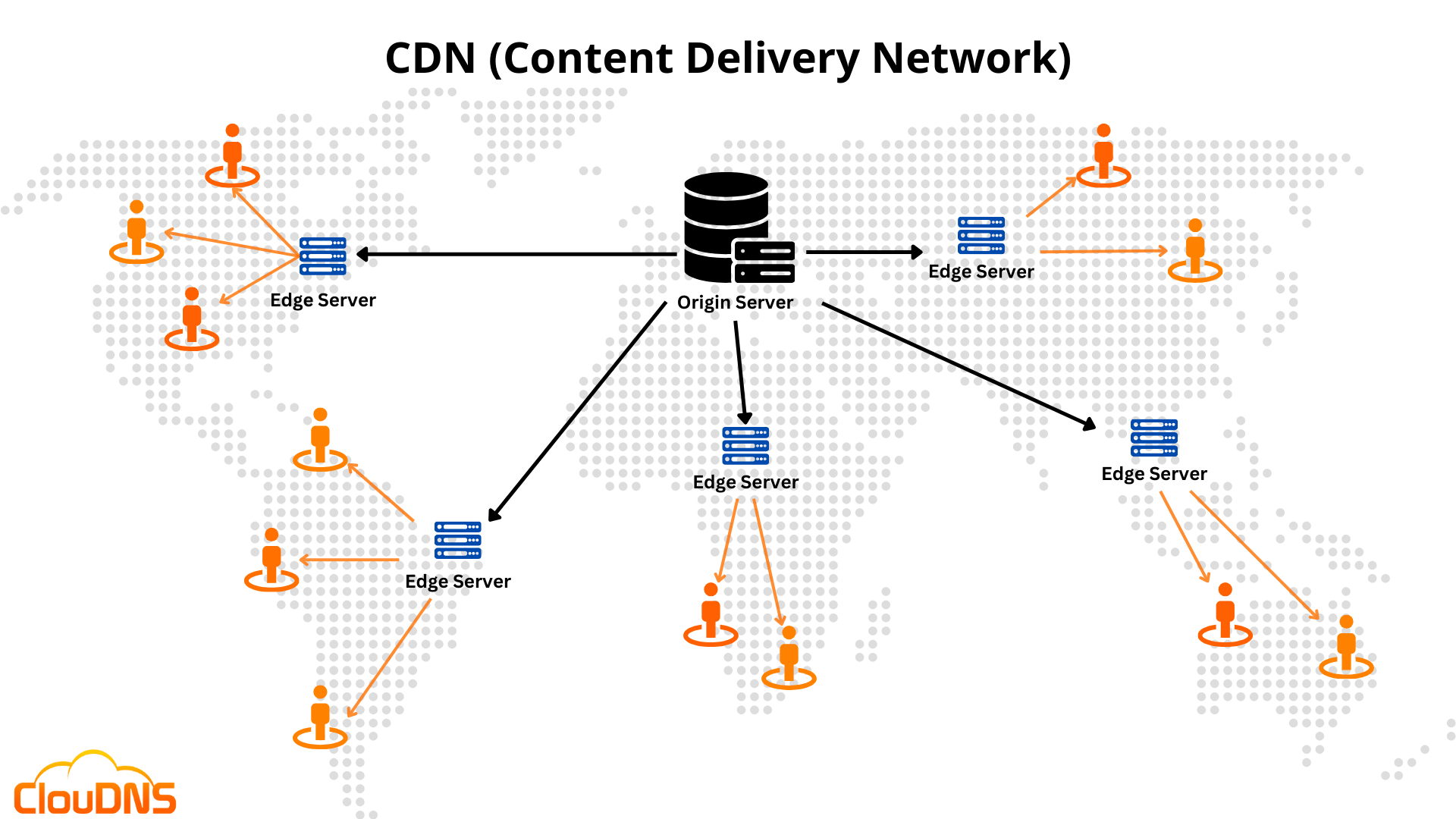
- CDN: a network of edge servers spread geographically. Content is placed in advance (a push from the origin, or replicating the origin to every edge), and requests are routed to the nearest edge by DNS or anycast.
Request processing
- Proxy: the client is configured to use it, or the network intercepts the request. The proxy checks freshness, revalidates with
If-None-MatchorIf-Modified-Since, and returns the object or a304. - CDN: the client's DNS query resolves to an edge address; the edge serves the cached copy, and on a miss it fetches from the origin (or a parent tier) and stores it. The client is usually unaware.
Replication mechanism
- Proxy: one copy per proxy, caches what its own users requested, and has no knowledge of other proxies.
- CDN: many coordinated copies, with a routing layer that picks the closest, and mechanisms for invalidation and for pre-warming popular objects.
Comparison
| Point | Web proxy cache | CDN |
|---|---|---|
| Serves | A local client group | A global audience |
| Placement | On demand, one node | Pushed or replicated to edges |
| Routing | Client configured or intercepted | DNS or anycast to nearest edge |
| Scope | Bandwidth saving | Latency and scale |
| Control | The network administrator | The content owner pays |
Conclusion
A proxy cache saves bandwidth for one organisation by remembering what its users asked for; a CDN buys latency for a global audience by pre-placing content near them. They can be layered: a CDN edge in front of an origin, and a corporate proxy in front of the users.